Built for the newsstand, engineered for memory
In 1990, Todd McFarlane arrived at Spider-Man #1 as the rare creator whose name was itself part of the sales pitch. He wrote, pencilled, inked, and supplied a cover that compressed his version of Spider-Man into a single unmistakable knot of limbs, eyes, and webbing. Heritage Auctions records an initial press run of 2.35 million copies, followed by additional demand, while the original release appeared in multiple collectible editions built around the same drawing.
That combination matters. The image was reproduced at enormous scale just as variant-minded collecting was becoming a defining feature of the decade. Readers saw the crouch repeated in metallic editions, advertisements, convention displays, price guides, and long boxes. Repetition turned a dramatic drawing into a symbol.
A pose other artists could inhabit
The cover’s afterlife depends on how little information it needs to remain legible. A crouched body fills the center. Web lines radiate outward. Large eyes cut through the tangle. Later artists can substitute Batman, Sonic, monsters, mascots, or parody heroes and still trigger recognition before the reader processes the logo.
A homage is therefore more than copying. Each version tests which ingredients are essential. Some preserve McFarlane’s anatomy; others retain only the circular compression and enclosing lines. Together they show the cover functioning less like a single illustration and more like a reusable sentence in comics’ visual vocabulary.
From printed cover to collectible object
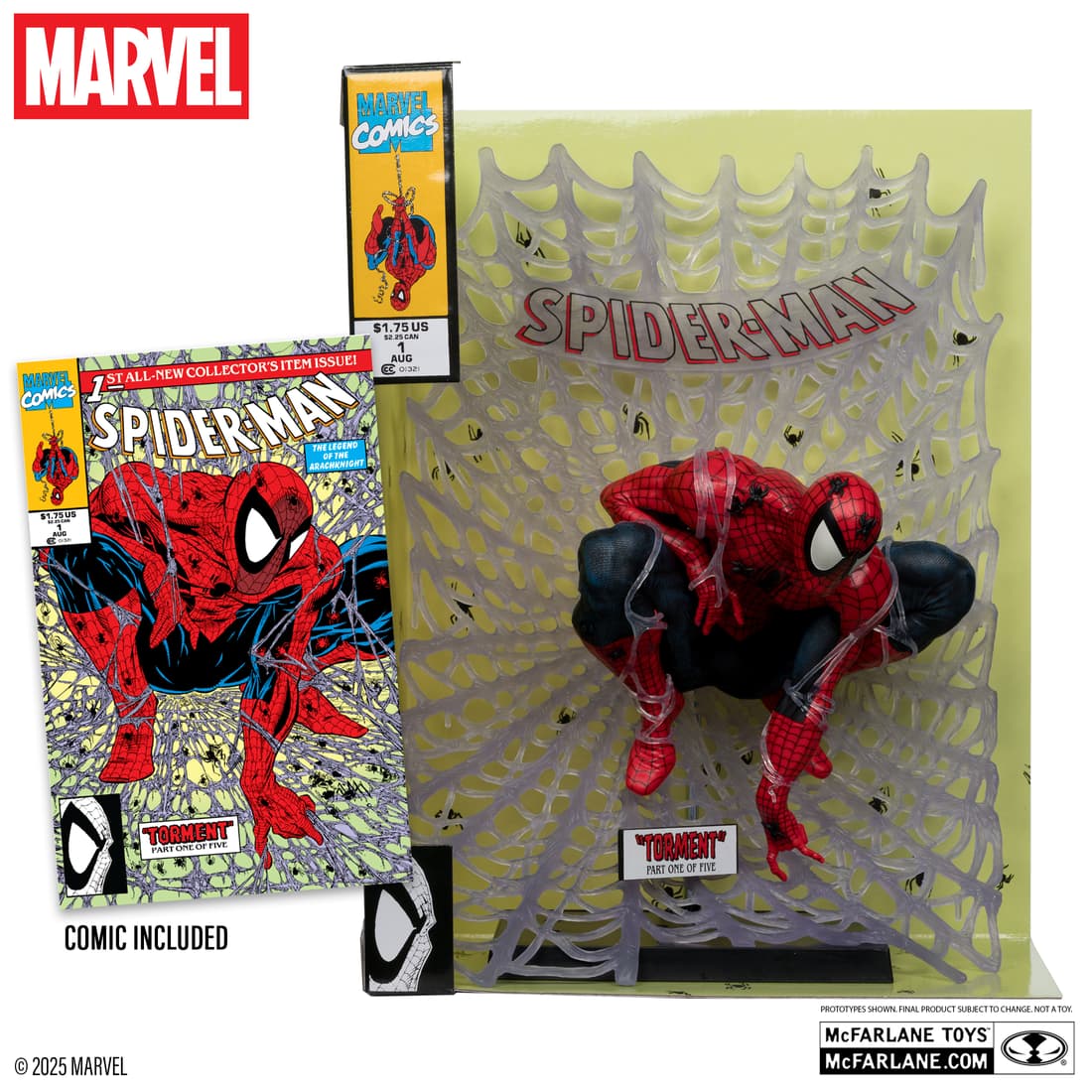
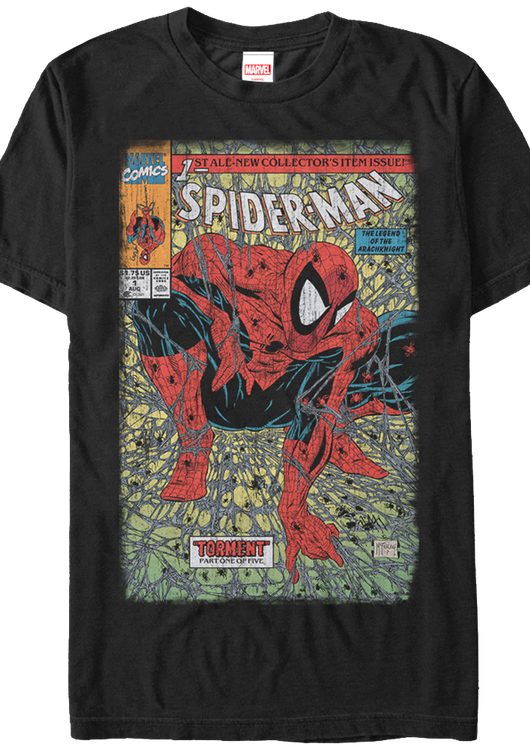
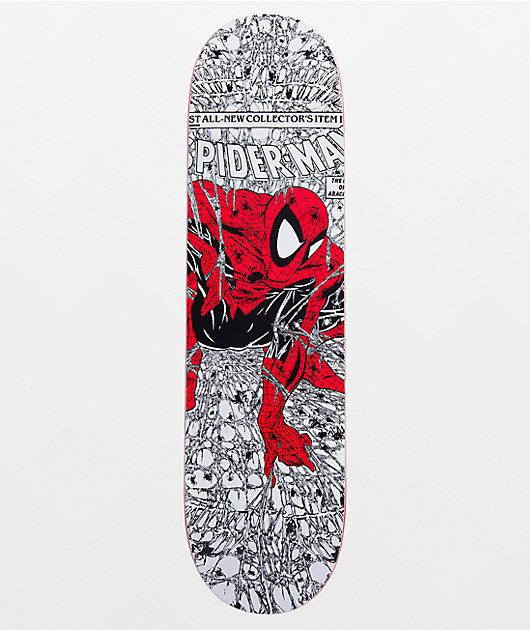
Merchandise makes that transformation literal. McFarlane Toys translated the composition into a sculptural display with a crouching figure, dimensional web, backdrop, and comic reprint. The HUF x Marvel collaboration stretched the image across limited skateboard decks, while licensed shirts turn the page into something worn in public.
These products are evidence of cultural endurance. Manufacturers assume that the silhouette, web field, and “Torment” presentation are recognizable enough to carry a product decades after publication. The cover no longer needs the story inside the comic to explain why it matters.
A cover enters the movies before the camera rolls
Production material reported for Spider-Man: Brand New Day shows a three-dimensional visualization of the Spider-Man #1 composition among comic images used during development. It is not a published homage cover and should not enter the catalog. It is something different—and culturally revealing: a comic cover functioning as visual reference material for filmmakers.
That distinction is important. CoverLineage catalogs published cover descendants, while Lineage Notes follows the image into other media. A previsualization or reference sculpture demonstrates the pose moving from print into the process of building screen imagery, even if it never appears as a finished shot.
The meme test
Iconic covers eventually become templates. The McFarlane crouch survives redraws, cosplay photographs, fan recreations, and jokes because it can be understood at a glance and altered without losing its identity. That is the same mechanism that powers a meme: a stable structure invites endless substitution.
Its legacy is not simply that Spider-Man #1 was popular. The deeper achievement is that McFarlane designed an image capable of generating new images. Every serious tribute and absurd parody adds another branch to the lineage—and confirms that the original remains culturally alive.