An origin told before the comic opens
The published 1962 cover is a collaboration between Jack Kirby, who pencilled its bold construction, and Steve Ditko, who inked the finished image and drew the interior story that defined Peter Parker. Before readers knew the costume, powers, or lesson of responsibility, the cover supplied a complete demonstration: this new figure could swing above New York while carrying another man with apparent ease.
Its typography reinforces the performance. “Introducing Spider-Man” occupies the center like an announcement inside the action, while the speech balloons explain that the masked hero is also the timid teenager Peter Parker. The cover is at once advertisement, character sheet, and miniature narrative.
A composition built to travel
The diagonal is the engine. A web line pulls from the upper corner through Spider-Man’s raised hand; the passenger hangs beneath; the city recedes toward the lower edge. Artists can replace the carrier, the captive, or the skyline and still preserve the relationship among those forces.
That portability explains its echoes across superhero books, humor, horror, licensed characters, and independent comics. Some are reverent, others ridiculous. All rely on the audience recognizing not merely Spider-Man, but the specific act of introducing Spider-Man.
The cover becomes an object
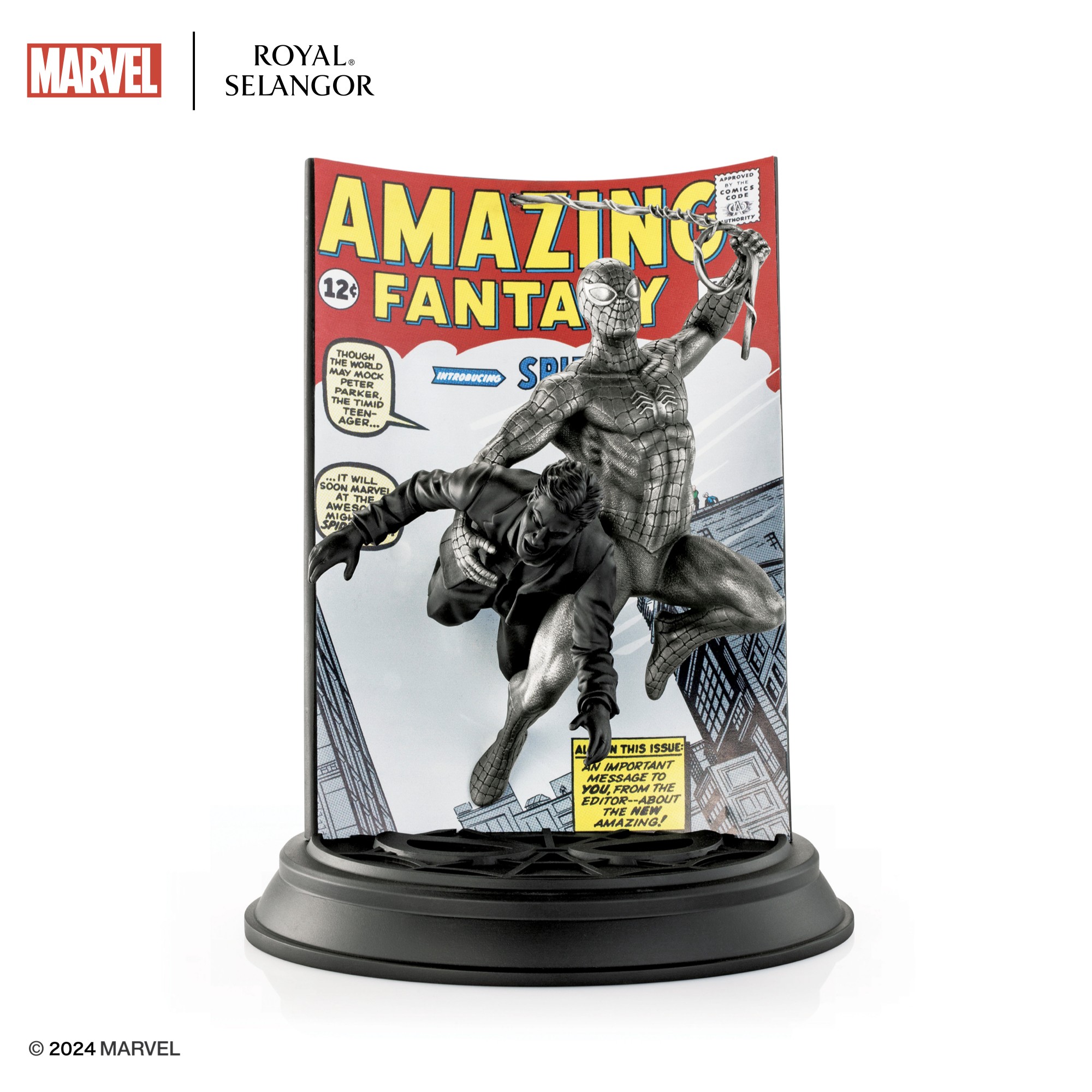
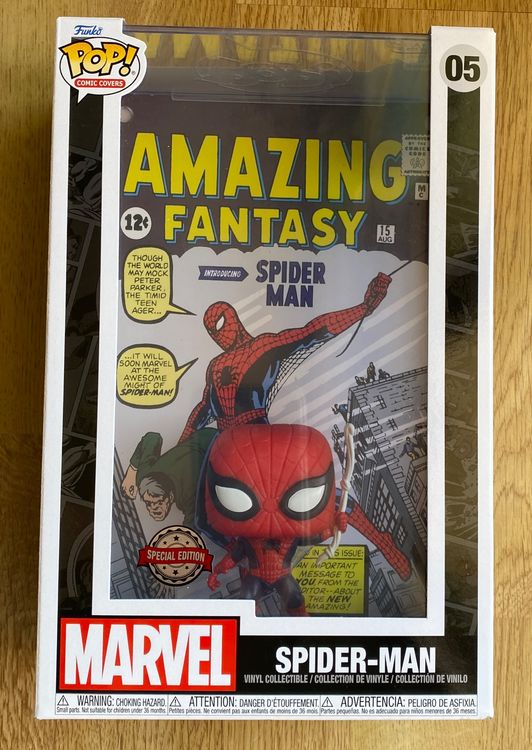
Collectibles often preserve the entire page because the trade dress is inseparable from the memory. Royal Selangor’s pewter sculpture places a three-dimensional Spider-Man and passenger before a curved reproduction of the cover. Funko’s Comic Covers edition uses the same museum-case logic: figure and printed source are displayed together so the object can cite its own origin.
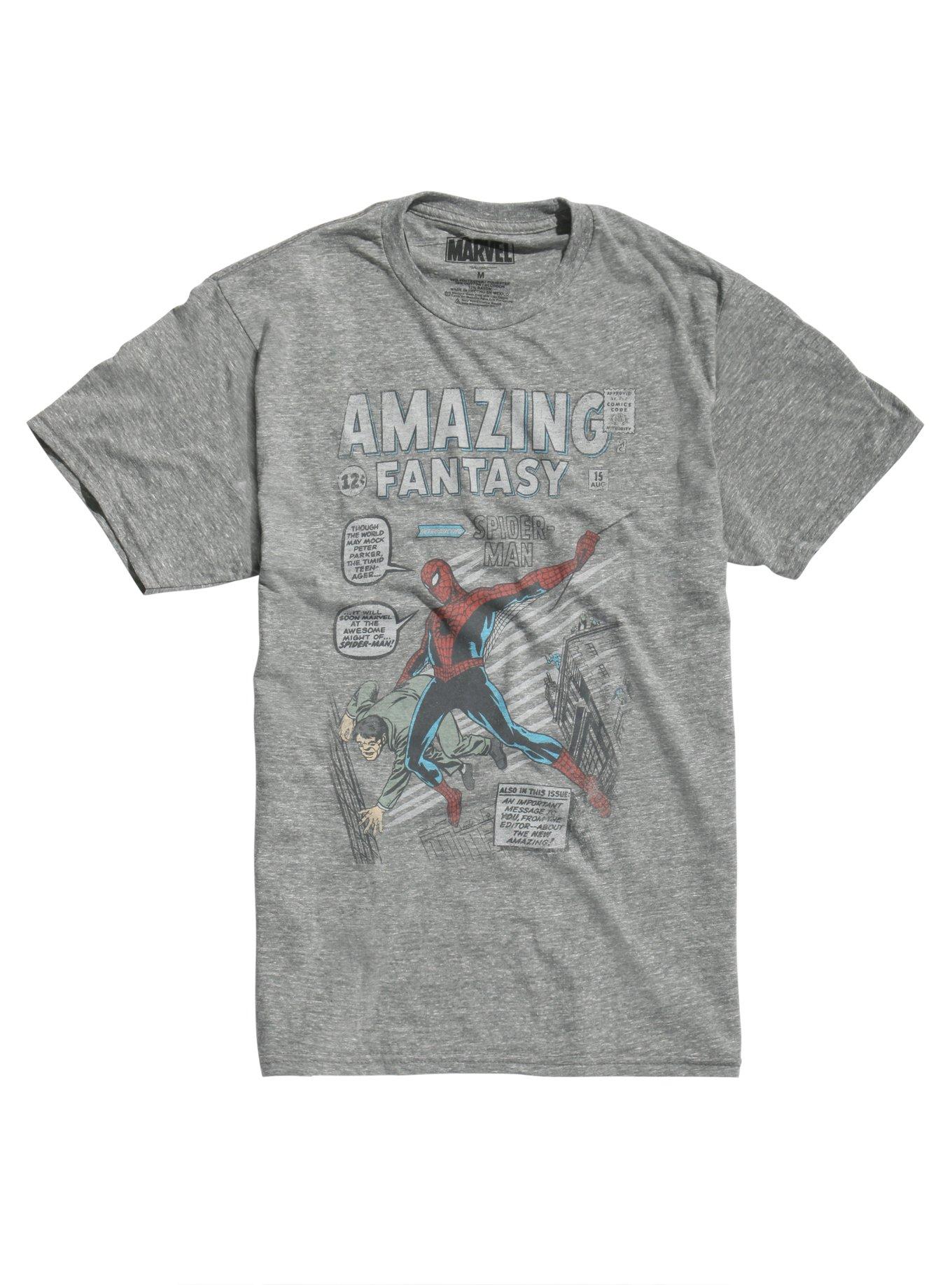
The image also circulates on shirts, posters, puzzles, wall art, and toys. In each form, the cover moves beyond the category of “old comic” and becomes a piece of design—an arrangement that can decorate a room or identify the wearer as someone who knows where Spider-Man began.
From still image to moving picture
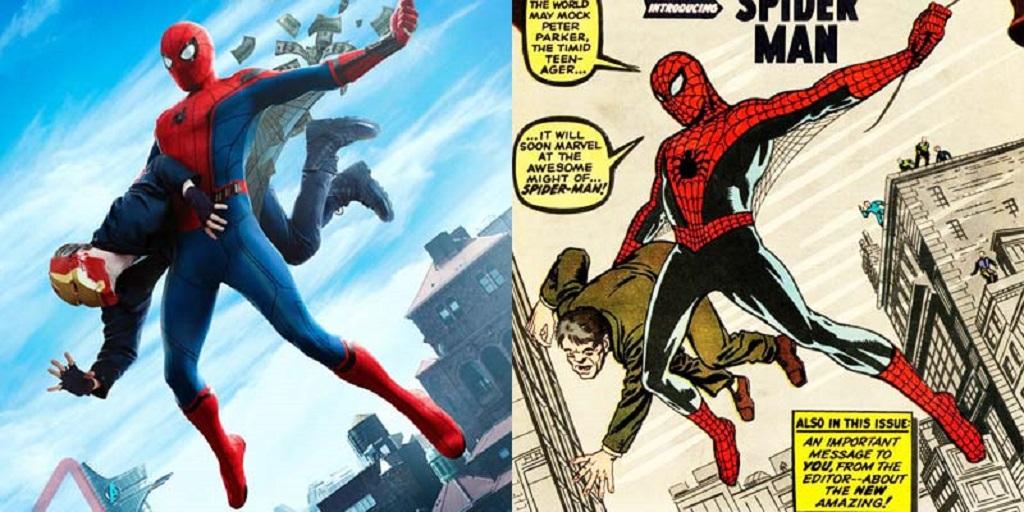
The leap from comics to film became explicit in 2017, when Sony and Marvel released a Spider-Man: Homecoming promotional poster that recreated the Amazing Fantasy #15 composition with the film costume and a robber wearing an Iron Man mask. The joke works because the audience is invited to compare a contemporary movie image with the 1962 original.
That recreation demonstrates the cover’s unusual cinematic quality. Kirby and Ditko froze an action at the instant when direction, height, weight, and character are all readable. A film can animate the swing, but the single still already contains the movement.
Why the first swing still matters
Amazing Fantasy #15 is historically important because it contains Spider-Man’s first appearance. The cover is culturally important for another reason: it gave that first appearance a reusable public face. It is how the origin is remembered even by people who have never held the issue.
Every homage, shirt, statue, meme, and screen recreation performs the same act. It returns Spider-Man to the moment before he was familiar, then announces him again.